
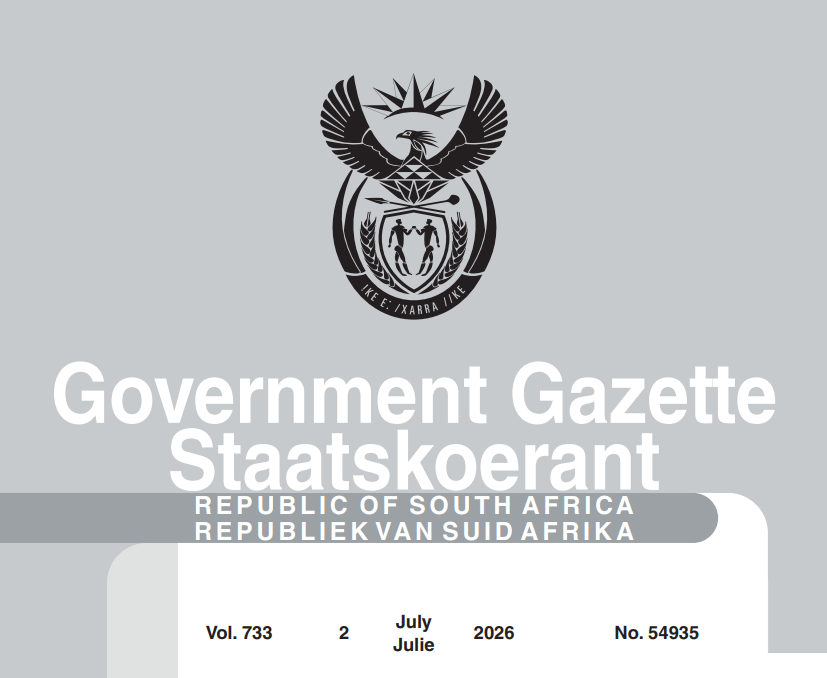
On 2 July 2026, Government Notice GoN 7648 was published in Government Gazette No. 54935. This notice, issued under the Superior Courts Act, 2013, formally determines the areas of jurisdiction for the main and local seats of various High Court divisions, with significant consequences for Gauteng.
The Change in a Nutshell
Previously, the Gauteng Division, Pretoria (main seat) and the Gauteng Local Division, Johannesburg operated with blanket concurrent jurisdiction across much of Gauteng. This stemmed from transitional arrangements allowing Johannesburg to hear matters that would otherwise fall under Pretoria until its jurisdiction was fully determined.
That transitional concurrent jurisdiction has now ended.
Under the new determination:
- Pretoria (Main Seat): Exclusive jurisdiction over the Tshwane Magisterial District (City of Tshwane Metropolitan Municipality).
- Johannesburg (Local Seat): Jurisdiction over the City of Johannesburg, Ekurhuleni, Sedibeng, and West Rand areas.
While the division as a whole retains appeal jurisdiction mechanisms, the era of freely choosing between the two seats for many matters in Gauteng is over.
What This Means from a Compliance & Risk Perspective
For in-house counsel, compliance officers, litigators, and businesses operating in Gauteng, this is more than a procedural tweak – it has real operational and strategic implications:
Forum Selection & Risk of Jurisdiction Challenges
Matters must now be instituted in the correct seat based on the defined geographical area. Incorrect forum selection could lead to points in limine, delays, cost orders, or even dismissal/referral. This increases the importance of precise due diligence on the location of parties, cause of action, and immovable property.
Contractual Implications
- Jurisdiction clauses in contracts, loan agreements, suretyships, and commercial deals should be reviewed and updated where necessary to align with the new territorial boundaries.
- Consider specifying the appropriate High Court seat (Pretoria or Johannesburg) or including fallback provisions.
Regulatory & Dispute Resolution Compliance
- Companies in regulated sectors (financial services, mining, property, construction) often face urgent applications, reviews, or interdicts. Knowing the correct court impacts timelines, judge availability, and court rolls.
- Liquidations, business rescue, and insolvency matters must be brought in the proper jurisdiction to avoid procedural complications.
Litigation Strategy & Costs
Litigants and their legal teams can no longer “forum shop” as easily within Gauteng. This may reduce congestion in one court but could create capacity pressures in the other. Expect potential shifts in practice and advocacy approaches.
Broader Rationalisation of the Court System
This forms part of the ongoing implementation of the Superior Courts Act, aiming for a more structured, efficient, and geographically logical superior court system. It aligns with similar determinations in other provinces.
Practical Recommendations Going Forward
- Review & Update Templates: Legal and compliance teams should audit standard contracts, service agreements, and dispute resolution clauses.
- Internal Training: Brief litigation, risk, and compliance teams on the new boundaries.
- Geographical Mapping: Map key assets, operations, and counterparties against the updated magisterial districts.
- Stay Updated: Monitor court rolls, practice directives from the Judge President, and any traditional judgements interpreting the GoN 7648.
- Engage Experts: For complex multi-jurisdictional matters, consult specialists familiar with the Gauteng Division.
This change promotes greater clarity and specialisation but demands proactive adaptation to avoid unnecessary setbacks.